
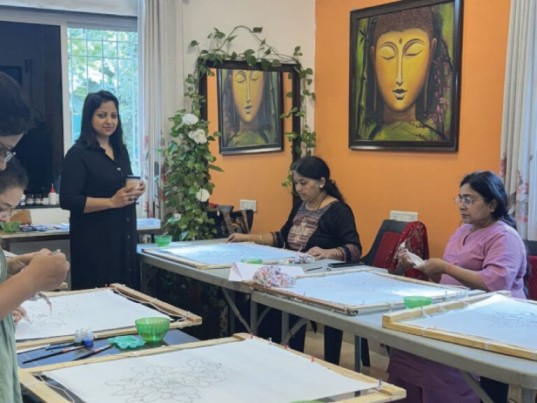
In the world of fashion, there is something incredibly special about owning a piece that is not just beautiful but also carries the soul and dedication of an artist. At Diva Lifestyles, we celebrate wearable art, and our hand-painted sarees are more than just garments – they are canvases brought to life by masterful strokes and deep creative expression. In this blog, we take you behind the brush to reveal the intricate process, craftsmanship, and passion that go into making each hand-painted saree.
The Art of Hand-Painting: A Legacy of Craftsmanship
Hand-painted sarees have a rich history rooted in traditional textile artistry. Unlike machine-printed or mass-produced designs, each hand-painted saree carries the uniqueness of an artisan’s touch. The tradition of painting on fabric dates back centuries, from the elaborate Kalamkari of India to the vibrant Batik styles of Indonesia. Today, Diva Lifestyles brings this tradition into the modern era by fusing heritage techniques with contemporary aesthetics.
Step-by-Step: The Making of a Hand-Painted Saree
Step 1: Choosing the Right Fabric
The journey of a hand-painted saree begins with selecting the perfect fabric. Natural fabrics like silk, cotton, chiffon, and georgette are ideal as they absorb paint beautifully while retaining their texture and drape. The choice of fabric determines the type of painting technique to be used and influences the final look and feel of the saree.
Step 2: Concept & Design Ideation
Before the first brushstroke touches the fabric, the design is carefully conceptualized. Artists draw inspiration from nature, folklore, abstract art, and cultural motifs. Some of the most popular themes include:
The artist sketches the design onto the fabric using chalk or a fine pencil, ensuring precision before painting begins.
Step 3: Preparing the Fabric for Painting
The fabric is washed and ironed to remove any starch or impurities that may interfere with the absorption of colors. A wooden or glass frame is used to stretch and secure the fabric, preventing wrinkles or smudging while painting.
Step 4: Bringing Art to Life with Paint
This is where the magic happens. Using specialized fabric paints, dyes, and sometimes even natural pigments, the artist meticulously fills the outlined design. Various techniques are employed to achieve depth, texture, and vibrancy:
The hand-painting process can take anywhere from a few days to several weeks, depending on the complexity of the design.
Step 5: Drying & Fixing the Colors
Once the painting is complete, the saree is left to dry naturally. Heat-setting is a crucial step to ensure the longevity of the colors. This is done by ironing the fabric on the reverse side or steaming it carefully to lock in the pigments. Some pieces also undergo a post-painting wash to remove any excess colors.
Step 6: Final Touches & Embellishments
Many hand-painted sarees are further enhanced with:
Each saree is then carefully folded, packaged, and prepared for its new home, where it will be cherished as a one-of-a-kind masterpiece.
The Emotional Connection: Wearing Art with Meaning
A hand-painted saree is not just an outfit; it is a wearable story. When you drape yourself in one, you are carrying the vision of an artist, the dedication of hours of meticulous work, and a connection to heritage and artistry. Every brushstroke tells a story, making your saree an expression of your individuality and elegance.
Why Choose a Hand-Painted Saree from Diva Lifestyles?
Caring for Your Hand-Painted Saree
To preserve the beauty and longevity of your saree:
Join Our Hand-Painting Workshops
If you’ve ever been fascinated by the art of fabric painting, why not try your hand at it? At Diva Lifestyles, we offer online and offline workshops where you can learn:
Whether you want to start a new hobby or create personalized gifts, our workshops provide the perfect opportunity to explore your creativity.
Embrace the Beauty of Wearable Art
A hand-painted saree from Diva Lifestyles is more than a fashion choice; it is a celebration of art, culture, and self-expression. Every piece is a labor of love, designed to make you feel special and unique. Experience the magic of wearable art and let every brushstroke tell your story.
🖌️ Explore Our Collection & Own a Masterpiece Today! 🎨